
Mommy Makeover After Pregnancy in Velachery, Chennai

Pregnancy and childbirth can bring lasting changes to a woman’s body. Even after recovering from delivery, some women notice loose abdominal skin, changes in breast shape, stubborn fat deposits or changes in their overall body contour. These changes are natural, but they can sometimes affect comfort and confidence. A mommy makeover is a term used to describe a combination of cosmetic procedures designed to address selected body changes after pregnancy. For women exploring a mommy makeover in Velachery, Chennai, understanding the available options, recovery requirements and possible risks is an important first step. What Is a Mommy Makeover? A mommy makeover is a personalised combination of cosmetic surgical procedures intended to address body changes following pregnancy and childbirth. It is not one fixed operation. The treatment plan depends on a woman’s health, concerns, medical history and goals. Depending on individual suitability, procedures may include a tummy tuck, liposuction or breast surgery. Not every woman needs or is suitable for every procedure. A consultation with a qualified plastic surgeon helps determine whether surgery is appropriate or whether non-surgical options may better meet your needs. Why Do Women Consider a Mommy Makeover After Pregnancy? Pregnancy stretches the skin and abdominal muscles, while hormonal changes and breastfeeding can affect breast size and shape. Some changes improve naturally over time, while others may persist. Common concerns include: These concerns are individual. A mommy makeover is an elective option, not a medical requirement or a substitute for postpartum recovery. What Procedures Can a Mommy Makeover Include? 1. Tummy Tuck (Abdominoplasty) A tummy tuck removes selected excess abdominal skin and may tighten separated abdominal muscles when appropriate. It can improve abdominal contour but involves surgery, scarring and a recovery period. 2. Liposuction Liposuction removes localised fat deposits to improve body contour. It is not a weight-loss treatment and does not reliably correct significant loose skin. 3. Breast Lift or Breast Augmentation A breast lift may help address sagging, while breast augmentation may restore or increase breast volume using implants or other suitable techniques. The appropriate option depends on breast anatomy, health and personal goals. 4. Other Individualised Procedures Some women may have additional concerns that require separate assessment. The procedures recommended will depend on medical suitability, and combining multiple operations is not appropriate for everyone. When Can You Consider a Mommy Makeover After Delivery? There is no single timeline that is right for every woman. In general, elective cosmetic surgery should wait until the body has recovered sufficiently from pregnancy and childbirth. Before considering surgery, it is important to: Many surgeons recommend waiting until breastfeeding has ended and breast size has stabilised before elective breast surgery. Your surgeon will advise on the appropriate timing for your circumstances. If you are planning another pregnancy, postponing a mommy makeover may help preserve the results because another pregnancy can stretch the abdominal skin and muscles again. What Are the Benefits and Risks? A mommy makeover may improve abdominal contour, address excess skin and change breast shape or volume. Some women also feel more comfortable with their appearance after recovery. However, results vary, and surgery cannot guarantee a particular body shape or restore every aspect of the body to its pre-pregnancy condition. Possible risks include infection, bleeding, blood clots, scarring, fluid accumulation, changes in sensation, wound-healing problems and complications related to anaesthesia. Combining procedures can increase the complexity of surgery and recovery. A qualified plastic surgeon should explain the expected benefits, limitations, alternatives and individual risks before you make a decision. What Is Recovery Like After a Mommy Makeover? Recovery depends on which procedures are performed and whether they are combined. You may need to limit lifting, strenuous activity and exercise for several weeks, following your surgeon’s instructions. If you have a newborn, arranging help with feeding, carrying and daily care is especially important. You may not be able to lift your baby safely during the early recovery period. Attend follow-up appointments and seek medical advice promptly if you experience fever, worsening redness, severe pain, chest pain, difficulty breathing or sudden leg swelling. Where Can You Seek a Mommy Makeover Consultation in Velachery, Chennai? If you are searching for information about a mommy makeover in Velachery, Chennai, choose a qualified plastic surgeon who can assess your concerns and explain which options are suitable for you. At Nandhini-Pearl Hospital, Velachery, women can enquire about relevant consultation services and the availability of an appropriate specialist. Confirm the availability of the specific cosmetic surgery service before scheduling an appointment. Women from Madipakkam, Pallikaranai, Perungudi, Taramani and nearby Chennai neighbourhoods can also seek a specialist consultation based on their needs. Frequently Asked Questions What does a mommy makeover include? It may include a tummy tuck, liposuction, breast lift or breast augmentation. The combination depends on the individual’s anatomy, health and goals. Is a mommy makeover safe? All surgery carries risks. A thorough medical assessment, an appropriately qualified surgeon and a suitable surgical facility are essential to help manage those risks. Can I have a mommy makeover while breastfeeding? Elective surgery is generally best postponed until breastfeeding has ended and breast changes have stabilised, particularly when breast procedures are planned. Discuss timing and medication considerations with your surgeon. Will a mommy makeover affect a future pregnancy? A future pregnancy can change the results, particularly after abdominal surgery. Discuss your family plans with your surgeon before deciding when to undergo treatment. Is a mommy makeover a weight-loss procedure? No. It is designed to address selected contour concerns, not to treat obesity or replace healthy nutrition and physical activity. Conclusion A mommy makeover may be an option for women who continue to experience specific body changes after pregnancy. However, the right decision depends on recovery, overall health, future pregnancy plans and realistic expectations. If you are considering a mommy makeover in Velachery, Chennai, begin with a consultation with a qualified plastic surgeon. Understanding the procedures, recovery needs and potential risks will help you make an informed decision that prioritises your health and wellbeing.
Post-Pregnancy Body Changes: What Should You Know? A Guide for Women in Velachery, Chennai

Pregnancy brings many beautiful changes, but the body continues to change even after childbirth. From hair fall and skin pigmentation to abdominal changes and vaginal discomfort, the postpartum period can feel different for every woman. Many new mothers wonder whether these changes are normal, how long recovery takes and when they should seek medical advice. Understanding what happens after delivery can help you care for yourself without unnecessary worry. If you are looking for postpartum care in Velachery, Chennai, here are some important things to know about your body after pregnancy. What Are the Common Changes After Pregnancy? Post-pregnancy changes are physical and hormonal changes that occur as the body recovers from pregnancy and childbirth. Some improve within a few weeks, while others may take several months or longer. 1. Abdominal Changes and Loose Skin After delivery, the abdomen may remain larger or softer than before pregnancy. This happens because the uterus needs time to shrink, the abdominal muscles have stretched and the skin may have lost some elasticity. Some women also develop diastasis recti, a separation between the abdominal muscles. What can help? Gentle walking, gradual return to physical activity and appropriate postpartum exercises can support recovery. A physiotherapist can recommend suitable exercises if abdominal muscle separation or discomfort is present. 2. Hair Fall After Delivery Postpartum hair shedding is common. During pregnancy, hormonal changes can keep more hair in its growth phase. After childbirth, more hairs may enter the shedding phase at the same time. Hair fall often becomes noticeable a few months after delivery and gradually improves for many women. What can help? Eat a balanced diet containing adequate protein, iron and other essential nutrients. Consult a doctor if hair loss is severe, continues for an unusually long time or occurs alongside fatigue or other symptoms. 3. Skin Pigmentation and Stretch Marks Dark patches on the face, pigmentation around the neck and underarms, and a dark line on the abdomen may develop during pregnancy. Stretch marks can also become more noticeable as the skin stretches. Some pigmentation fades after delivery, but it may not disappear completely. Stretch marks usually become lighter over time, although their texture may remain. What can help? Use sunscreen, moisturise regularly and choose gentle skincare products. Consult a dermatologist before using strong pigmentation creams, chemical peels or other cosmetic treatments, especially if you are breastfeeding. 4. Vaginal Changes and Pelvic Floor Weakness After vaginal childbirth, some women notice vaginal soreness, dryness, changes in sensation or reduced pelvic floor strength. Urinary leakage when coughing, sneezing or exercising can also occur. These symptoms may improve as the tissues heal, but persistent discomfort or leakage should not be ignored. What can help? Pelvic floor exercises may help when performed correctly. A women’s health physiotherapist or gynaecologist can assess your symptoms and guide your recovery. If you experience persistent vaginal discomfort or are considering a procedure such as vaginoplasty, seek an individual medical assessment rather than assuming surgery is necessary. 5. Breast Changes After Pregnancy Breasts may feel fuller, heavier or tender during breastfeeding. Their size and shape may change after breastfeeding ends, and some women notice reduced firmness. These changes are influenced by hormones, breast tissue changes and individual factors. What can help? A well-fitting supportive bra, comfortable feeding positions and professional breastfeeding support can help manage common concerns. Seek medical advice for a persistent lump, redness, fever or significant breast pain. 6. Weight Changes and Low Energy Your body needs time to recover after childbirth. Weight loss varies between women and may be influenced by sleep, nutrition, physical activity, breastfeeding and hormonal changes. There is no need to rush into intense workouts or restrictive diets. What can help? Focus on balanced meals, hydration, rest and gradual physical activity when your healthcare professional confirms it is appropriate. Persistent fatigue may require assessment for conditions such as anaemia or thyroid problems. 7. Emotional and Hormonal Changes Hormonal shifts, sleep deprivation and the demands of caring for a newborn can affect your emotions. Some women experience temporary mood changes, while others develop postpartum depression or anxiety. If sadness, anxiety, loss of interest or difficulty coping persists or interferes with daily life, speak to a healthcare professional. You deserve support, and effective treatment is available. How Long Does Postpartum Recovery Take? There is no fixed recovery timeline. Some changes improve in the first six weeks, while abdominal strength, pelvic floor function, skin changes and weight may take several months or longer to recover. Your recovery may also differ depending on whether you had a vaginal delivery or a C-section, your general health and any complications during pregnancy or childbirth. Your postnatal check-up is an opportunity to discuss physical recovery, emotional wellbeing, contraception, breastfeeding and any symptoms that concern you. When Should You See a Doctor After Delivery? Contact your healthcare professional promptly if you experience persistent pain, worsening wound problems, unusual vaginal discharge or ongoing urinary leakage. Seek urgent medical care for heavy bleeding, chest pain, difficulty breathing, severe headache with visual changes, one-sided leg swelling or thoughts of harming yourself or your baby. These symptoms should not be dismissed as ordinary postpartum changes. Post-Pregnancy Care in Velachery, Chennai New mothers looking for post-pregnancy care in Velachery, Chennai, can seek professional guidance for recovery, hormonal changes, skin concerns and pelvic floor symptoms. At Nandhini-Pearl Hospital, Velachery, women can enquire about appropriate gynaecology care and discuss their postpartum concerns with a qualified healthcare professional. Women travelling from Madipakkam, Pallikaranai, Perungudi, Taramani and nearby Chennai neighbourhoods can also look for suitable postnatal support based on their individual needs. The right care should focus on your health, comfort and recovery rather than comparing your body with how it looked before pregnancy. Frequently Asked Questions What changes are normal after pregnancy? Abdominal changes, stretch marks, temporary hair shedding, breast changes, vaginal soreness and hormonal fluctuations are common. Persistent or severe symptoms need medical assessment. How long does it take for the body to recover after delivery? Initial recovery often takes several weeks,
Chemical Peels During Pregnancy: Are They Safe? A Guide for Women in Velachery, Chennai

Pregnancy brings many changes to the body, and the skin is no exception. Some women notice acne, dark patches on the face, uneven skin tone or increased sensitivity. These changes may lead them to consider cosmetic treatments such as chemical peels. But are chemical peels safe during pregnancy? The answer depends on the ingredients, their concentration and the type of treatment. Since pregnancy can affect how the skin responds to skincare products, it is important to take a cautious approach. If you are looking for a dermatologist for pregnancy skin problems in Velachery, Chennai, understanding your options can help you make informed decisions about your skincare routine. What Is a Chemical Peel? A chemical peel is a cosmetic treatment that uses a chemical solution to exfoliate the outer layers of the skin. Depending on the formulation and depth, it may help improve acne, uneven pigmentation, rough texture and certain types of skin discolouration. Common ingredients used in chemical peels include glycolic acid, lactic acid, salicylic acid and trichloroacetic acid (TCA). These ingredients work differently, and their safety depends on how they are used. However, a treatment that is suitable before pregnancy may not be the best choice during pregnancy. Are Chemical Peels Safe During Pregnancy? Chemical peels are generally best postponed during pregnancy, particularly elective or deeper peels, until you can discuss them with a qualified dermatologist. Research on many cosmetic procedures during pregnancy is limited. Safety depends on the ingredient, concentration, amount applied, skin condition and depth of the peel. For example, some superficial treatments use ingredients that may have a lower risk when used appropriately, but this does not mean every chemical peel is proven safe during pregnancy. Professional assessment is essential before considering any procedure. If you are pregnant and planning a chemical peel in Velachery or elsewhere in Chennai, inform your dermatologist about your pregnancy before booking the treatment. Which Chemical Peel Ingredients Need Caution? Different peeling agents have different safety considerations. 1. Salicylic Acid Salicylic acid is commonly used for acne and clogged pores. High concentrations and professional peeling treatments require particular caution during pregnancy. Do not assume that an acne peel is safe simply because the ingredient is available in some over-the-counter products. 2. Glycolic Acid Glycolic acid is an exfoliating ingredient used to improve skin texture and uneven tone. Limited, appropriate topical use may be considered in some circumstances, but professional peels use different concentrations and strengths. Ask your dermatologist before using it during pregnancy. 3. Lactic Acid Lactic acid is an exfoliating alpha-hydroxy acid found in some skincare products. Its suitability depends on the formulation and how it is used. A product containing lactic acid should not automatically be considered suitable for every pregnant woman. 4. Trichloroacetic Acid (TCA) TCA is used in professional chemical peels, including treatments that penetrate deeper into the skin. Because of the treatment’s intensity and limited pregnancy-specific safety evidence, elective TCA peels should be postponed during pregnancy. Important: Do not select a chemical peel based only on its ingredient name. Concentration, formulation and treatment depth all matter. Safer Ways to Manage Skin Problems During Pregnancy You do not need to undergo a cosmetic procedure to care for your skin during pregnancy. A simple, consistent routine is often a sensible starting point. Avoid retinoids, including retinol, during pregnancy unless your treating clinician specifically advises otherwise. Hydroquinone is also generally avoided because of concerns about absorption and limited pregnancy safety data. When Should You Consult a Dermatologist? Consider consulting a dermatologist if you experience persistent acne, increasing pigmentation, an unexplained rash, significant irritation or skin changes that do not improve with gentle skincare. Seek prompt medical advice for severe itching, blistering, painful skin changes or a rapidly spreading rash. Severe itching during pregnancy, particularly without an obvious rash or involving the palms and soles, should be assessed promptly by your maternity care team. A dermatologist can review your symptoms, skincare products and pregnancy stage before recommending an appropriate plan. Where Can You Get Advice for Pregnancy Skin Problems in Velachery, Chennai? If you are searching online for a dermatologist for pregnancy skin problems in Velachery, Chennai, choose a qualified professional who understands the precautions needed during pregnancy. At Nandhini-Pearl Hospital, Velachery, women can enquire about care for pregnancy-related skin concerns and ask about an appropriate consultation. The right approach should prioritise maternal safety and individual needs rather than rushing into cosmetic procedures. Women travelling from Madipakkam, Pallikaranai, Perungudi, Taramani and nearby Chennai neighbourhoods can also look for a qualified dermatologist who can assess their concerns. Frequently Asked Questions Can I get a chemical peel during pregnancy? It is generally prudent to postpone elective chemical peels during pregnancy. Consult a dermatologist before considering any exfoliating treatment. Can chemical peels cause problems for my baby? The risk depends on the ingredients, concentration, application and treatment depth. Pregnancy-specific evidence is limited for many procedures, so avoid assuming that a peel is safe or harmful in every circumstance. Discuss any exposure or planned treatment with your clinician. How can I treat melasma during pregnancy? Sun protection, a gentle skincare routine and dermatologist-guided options are good starting points. Some pigmentation naturally fades after delivery, although this varies. When can I have a chemical peel after delivery? There is no single waiting period for everyone. Your recovery, skin condition, breastfeeding status and the ingredients being considered can affect the decision. Ask your dermatologist before resuming cosmetic treatments. Where can I seek advice about pregnancy skin problems in Velachery? You can enquire at Nandhini-Pearl Hospital, Velachery, Chennai, about an appropriate consultation for pregnancy-related skin concerns. Conclusion Pregnancy-related acne and pigmentation can be frustrating, but cosmetic treatments do not need to be rushed. Chemical peels vary in strength and formulation, and their safety during pregnancy is not established equally for every ingredient or procedure. Until a qualified dermatologist has assessed your situation, prioritise gentle skincare, sun protection and pregnancy-appropriate treatment options. For women in Velachery, Chennai, a professional consultation can help identify a suitable approach for
Urinary Tract Infection (UTI) in Women: Symptoms, Causes and Treatment in Velachery, Chennai
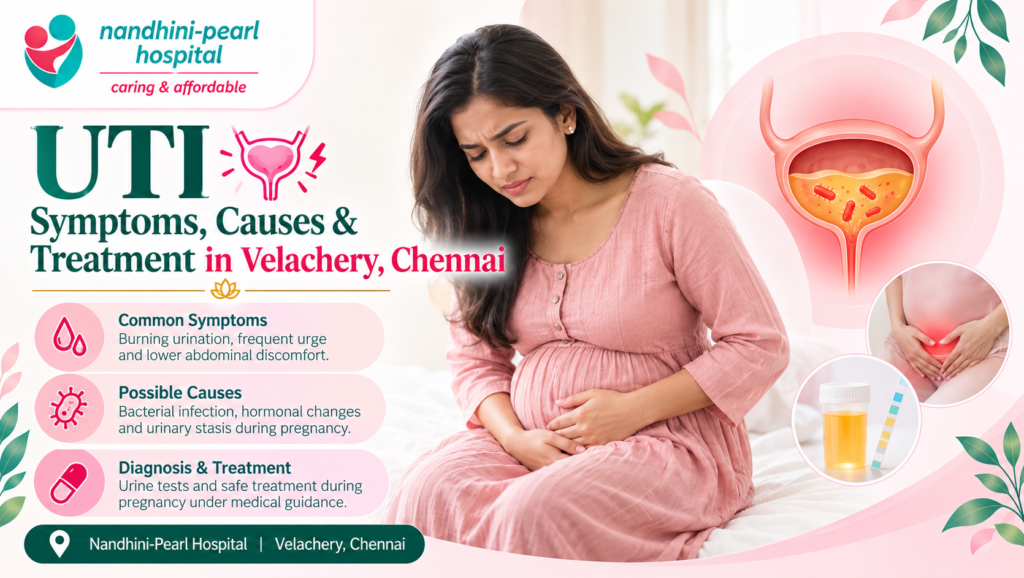
A burning sensation while passing urine, frequent trips to the bathroom, or discomfort in the lower abdomen can be easy to dismiss at first. However, these symptoms may indicate a urinary tract infection (UTI). Recognising the signs early can help women get the right treatment and avoid complications. If you are looking for information about UTI symptoms and treatment in Velachery, Chennai, understanding when to seek medical advice is an important first step. What Is a Urinary Tract Infection (UTI)? A urinary tract infection is an infection affecting any part of the urinary system, including the kidneys, ureters, bladder or urethra. Most UTIs involve the bladder or urethra and are commonly caused by bacteria entering the urinary tract. Women are more likely to develop UTIs because their urethra is shorter, making it easier for bacteria to reach the bladder. UTIs can occur at different stages of life, including during pregnancy. What Are the Common Symptoms of a UTI in Women? UTI symptoms can vary from person to person. Common signs include: These symptoms do not always mean a UTI, as other conditions can cause similar discomfort. A medical assessment can help identify the cause. Seek urgent medical attention if you experience fever, chills, pain in your back or side, vomiting, or feel seriously unwell. These symptoms may indicate a kidney infection or another condition requiring prompt care. Why Do Women Get UTIs? Several factors can increase the likelihood of developing a UTI. These include: Good personal hygiene may help reduce some risks, but UTIs can occur even when someone follows good hygiene practices. They are not necessarily a sign of poor cleanliness. Is a UTI During Pregnancy Dangerous? A UTI during pregnancy needs particular attention. Pregnancy changes the urinary system and can make it easier for bacteria to grow. Some pregnant women may have bacteria in their urine without noticeable symptoms. An untreated urinary infection during pregnancy can increase the risk of complications, including kidney infection and, in some cases, pregnancy-related complications. Contact your obstetrician if you notice urinary symptoms during pregnancy. Your doctor may recommend a urine test and, when necessary, a urine culture to identify bacteria and guide treatment. Routine antenatal care may also include urine testing as advised by your healthcare provider. Do not wait for symptoms to become severe, and never take leftover antibiotics or self-medicate during pregnancy. How Is a UTI Diagnosed and Treated? A doctor may assess your symptoms and recommend a urine test. A urine culture may be needed to identify the bacteria responsible and determine which antibiotics are appropriate. Treatment depends on the type and severity of infection, your medical history and whether you are pregnant. When antibiotics are prescribed, take them exactly as directed and complete the course according to your doctor’s instructions. Drinking adequate water may support general urinary health, but water alone cannot reliably treat a bacterial UTI. If symptoms persist or return after treatment, consult your doctor again. How Can Women Help Reduce the Risk of UTIs? A few practical habits may help lower the risk: These measures cannot prevent every infection, but they can support urinary health. Where Can You Seek Medical Advice for UTI in Velachery, Chennai? If you have symptoms of a urinary tract infection, consult a qualified healthcare professional for an appropriate assessment and treatment plan. Women who are pregnant or may be pregnant should seek medical advice promptly if urinary symptoms occur. Nandhini Pearl Hospital, Velachery, Chennai, provides women’s healthcare and maternity services. If you need advice about urinary symptoms, pregnancy-related concerns or antenatal care, contact the hospital to enquire about the appropriate consultation. Location: Nandhini Pearl Hospital, 40-B, 7th Street, near Vijayanagar Bus Stand, Tansi Nagar, Velachery, Chennai – 600042Phone: +91 9159590000Website: https://www.nandhini-pearl.in/ Frequently Asked Questions 1. What is the first sign of a UTI in women? A burning sensation while passing urine, frequent urination or a sudden urge to urinate can be early signs. Symptoms vary, so medical assessment may be needed. 2. Can a UTI go away without antibiotics? Some urinary symptoms may settle, but a bacterial UTI can require antibiotics. Do not rely on home remedies alone or delay care if symptoms continue or worsen. 3. Is a UTI common during pregnancy? Urinary infections and bacteria in the urine can occur during pregnancy. Screening and treatment when indicated are important because an untreated infection can lead to complications. 4. Which test confirms a UTI? A urinalysis can help assess signs of infection, while a urine culture can identify the bacteria and help guide antibiotic selection. 5. When should I see a doctor for UTI symptoms? Seek medical advice if you have burning urination, frequent or urgent urination, or lower abdominal discomfort. Fever, chills, back or side pain, and vomiting require urgent assessment. During pregnancy, contact your obstetrician promptly if urinary symptoms occur. Final Note UTIs are common and treatable, but the right care matters—especially during pregnancy. Recognising symptoms, avoiding self-medication and seeking timely medical advice can help protect your urinary and reproductive health.
Cosmetic Gynaecology in Velachery, Chennai | Nandhini-Pearl Hospital
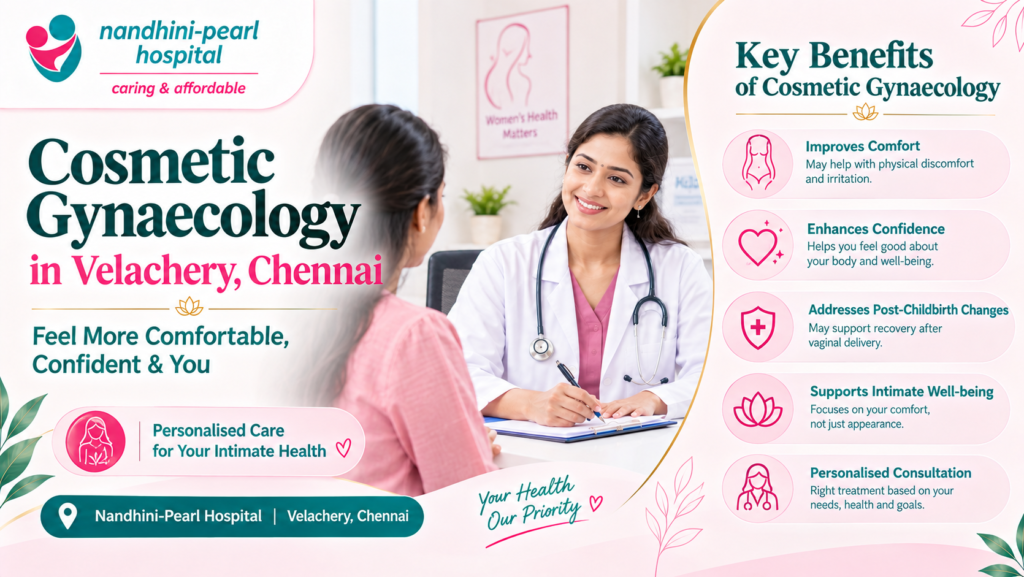
Women’s bodies can change with age, childbirth, hormonal changes and menopause. Sometimes these changes may affect comfort, confidence or intimate well-being. Cosmetic gynaecology in Velachery focuses on procedures and treatments that may address certain concerns involving the external genital area, vaginal tissues and pelvic region. But cosmetic gynaecology is not simply about appearance. For some women, treatment may also be considered when physical changes cause discomfort or affect daily life. What Is Cosmetic Gynaecology? Cosmetic gynaecology is a specialised area of women’s healthcare that may involve surgical or non-surgical treatments for concerns related to the female genital area. The right treatment depends on the woman’s symptoms, medical history, expectations and overall health. A consultation with a qualified gynaecologist is therefore an important first step. Why Do Women Consider Cosmetic Gynaecology? There is no single reason. Women may seek a consultation because of: Not every concern requires a cosmetic procedure. Sometimes pelvic-floor exercises, medical treatment or other non-surgical approaches may be more appropriate. Common Cosmetic Gynaecology Procedures Depending on the individual concern, a gynaecologist may discuss options such as: Labiaplasty Labiaplasty involves reshaping or reducing excess tissue of the labia. It may be considered when a woman experiences physical discomfort or has concerns about the appearance of the labia. Vaginoplasty Vaginoplasty is a surgical procedure that can alter or reconstruct vaginal tissues. In some cases, it may be discussed following childbirth or when specific anatomical concerns are present. Non-Surgical Treatments Some clinics may offer non-surgical treatments intended to address vaginal or vulvar concerns. The suitability, effectiveness and safety of these treatments can vary, so they should be discussed with a qualified medical professional before proceeding. Is Cosmetic Gynaecology Only About Appearance? No. Although appearance can be one reason a woman seeks consultation, some women may have concerns related to discomfort, tissue changes or intimate well-being. A good consultation should focus on the woman’s actual concern rather than assuming that surgery is necessary. What Happens During a Consultation? A gynaecologist may discuss: An examination may be recommended when medically appropriate. Your doctor can then explain whether treatment is necessary and which options may be suitable. Is Cosmetic Gynaecology Safe? Like any medical or surgical treatment, cosmetic gynaecology procedures can have risks. Depending on the procedure, these may include pain, swelling, infection, bleeding, scarring, changes in sensation or the possibility of needing further treatment. This is why choosing a qualified gynaecologist and discussing realistic expectations is important. Cosmetic Gynaecology in Velachery, Chennai If you are looking for cosmetic gynaecology in Velachery, Chennai, consider starting with a personalised consultation rather than choosing a procedure based only on online information. At Nandhini-Pearl Hospital, Velachery, women can discuss their concerns with a gynaecologist and understand the available treatment options based on their individual needs. Frequently Asked Questions What is cosmetic gynaecology?Cosmetic gynaecology includes surgical and non-surgical treatments that address selected concerns involving the female genital area, including appearance, comfort and tissue changes. Can cosmetic gynaecology help after childbirth?Some women may consider treatment after childbirth for specific tissue changes or discomfort. An individual assessment is needed to determine whether treatment is appropriate. Is surgery always required?No. Depending on the concern, non-surgical treatment, pelvic-floor care or reassurance may be appropriate. When should I see a gynaecologist?If you have persistent discomfort, pain, unusual symptoms or concerns about changes after childbirth or menopause, a gynaecological consultation can help identify the cause and available options. Take the First Step With the Right Consultation Your concern deserves a medical conversation without embarrassment or pressure. If you are considering cosmetic gynaecology in Velachery, speak with a qualified gynaecologist to understand what is causing the concern and whether treatment is actually needed. Nandhini-Pearl Hospital, Velachery, ChennaiPersonalised gynaecological care for every stage of a woman’s life.
Vaginal Infections During Pregnancy | Treatment in Velachery

Pregnancy brings many changes to the body, and vaginal discharge is one of them. In fact, having more discharge during pregnancy can be completely normal. But when the discharge changes in colour, smell, consistency, or comes with itching, burning or soreness, it may be a sign of an infection. For women searching for vaginal infection treatment in Velachery, the important thing to remember is simple: don’t try to diagnose the infection yourself. Different vaginal conditions can look similar, but they may need different treatments. Are Vaginal Infections Common During Pregnancy? Yes. Vaginal infections can occur during pregnancy, including yeast infections (thrush), bacterial vaginosis (BV) and some sexually transmitted infections. At the same time, not every increase in discharge means infection. Normal pregnancy discharge is generally thin, clear or milky white and without an unpleasant smell. If you notice a sudden change or uncomfortable symptoms, a gynecologist in Velachery can assess the cause and recommend pregnancy-safe treatment. What Does Normal Pregnancy Discharge Look Like? Pregnancy hormones can increase vaginal discharge. This is often called leukorrhea. Normal discharge is usually: So, seeing more discharge during pregnancy does not automatically mean something is wrong. When Could Discharge Mean an Infection? You should speak with your doctor if you notice: These symptoms can occur with different types of vaginal infections, and symptoms alone may not always identify the exact cause. Common Vaginal Infections During Pregnancy 1. Yeast Infection A vaginal yeast infection, commonly caused by Candida, can cause intense itching, soreness, redness and thick white discharge. Yeast infections occur frequently during pregnancy. When treatment is needed, pregnancy-specific recommendations matter. The CDC recommends topical azole treatment for 7 days during pregnancy and advises against oral fluconazole for pregnant women. 2. Bacterial Vaginosis Bacterial vaginosis occurs when the normal balance of vaginal bacteria changes. It may cause unusual discharge and a fishy or unpleasant smell, although some women have no symptoms. Symptomatic pregnant women should be evaluated and treated, because symptomatic BV has been associated with pregnancy complications such as preterm birth and premature rupture of membranes. 3. Other Vaginal or Sexually Transmitted Infections Conditions such as trichomoniasis and certain sexually transmitted infections can also cause discharge, irritation or other genital symptoms. Testing may be necessary when the cause isn’t clear. How Are Vaginal Infections Diagnosed During Pregnancy? This is where professional evaluation becomes important. Your gynecologist may consider: The reason is that itching, discharge and burning can have several different causes, and symptoms alone may not reliably identify the infection. Is Treatment Safe During Pregnancy? Many vaginal infections can be treated during pregnancy, but the medicine and duration need to be appropriate for pregnancy. For example, treatment recommendations for yeast infection during pregnancy differ from those for non-pregnant women. Similarly, symptomatic bacterial vaginosis has specific pregnancy treatment recommendations. Avoid taking leftover antibiotics, antifungal tablets or over-the-counter vaginal medicines without speaking to your doctor first. The right treatment depends on the actual cause. Can You Prevent Vaginal Infections During Pregnancy? You cannot prevent every infection, but simple habits can support vaginal health: Douching is not recommended as a treatment for bacterial vaginosis and may increase the chance of recurrence. When Should a Pregnant Woman See a Gynecologist? Don’t ignore a new or persistent vaginal symptom during pregnancy. Arrange a medical consultation if you have unusual-smelling discharge, yellow/green discharge, significant itching, soreness, burning while urinating or persistent irritation. Vaginal bleeding during pregnancy requires prompt medical attention. For women in and around Velachery, Madipakkam, Pallikaranai, Perungudi, Tharamani, Adambakkam and Nanganallur, timely evaluation can help identify the cause and ensure that treatment is appropriate for pregnancy. Frequently Asked Questions Is white discharge normal during pregnancy? Yes. Increased clear or milky-white discharge without an unpleasant smell is commonly normal during pregnancy. Can a vaginal infection harm the baby? Some infections, particularly symptomatic bacterial vaginosis, have been associated with adverse pregnancy outcomes. This is why symptoms should be evaluated rather than ignored. Can I use vaginal medicine without consulting my doctor? It is better not to self-treat during pregnancy. Different infections require different treatments, and some medicines are not recommended during pregnancy. Is vaginal itching always caused by a yeast infection? No. Itching can have several causes, so proper assessment is important before starting treatment. Where can I get pregnancy-related vaginal infection care in Velachery? A gynecologist or maternity-care team in Velachery, Chennai can evaluate symptoms, arrange appropriate testing when needed and recommend treatment based on your stage of pregnancy. Pregnancy Vaginal Infection Care in Velachery Vaginal changes during pregnancy can sometimes feel uncomfortable or worrying, but you don’t have to figure them out on your own. Early medical evaluation can help identify whether the discharge is a normal pregnancy change or an infection that needs treatment. At Nandhini Pearl Hospital, Velachery, women can discuss vaginal symptoms as part of their pregnancy and gynecological care, with treatment decisions made according to their individual needs.
Manual vs Electric Breast Pump: Which One Is Right for You?

A Complete Breast Pump Guide for New Mothers by Nandhini-Pearl Hospital, Velachery Bringing a baby into the world is an incredible journey, but breastfeeding doesn’t always follow the same path for every mother. While some babies latch easily, others may need extra support. Some mothers return to work within a few months, while others may face challenges like engorgement, low milk supply, or premature delivery. This is where a breast pump can become an invaluable companion. One of the most common questions new mothers ask is: “Should I choose a manual breast pump or an electric breast pump?” The answer depends on your lifestyle, breastfeeding goals, and how often you plan to express milk. At Nandhini-Pearl Hospital, Velachery, our maternity specialists and lactation support team help mothers make informed breastfeeding decisions that suit both mother and baby. This guide explains the differences between manual and electric breast pumps, their advantages, and how to decide which option is best for you. What Is a Breast Pump? A breast pump is a device that helps express breast milk when direct breastfeeding isn’t possible or convenient. Expressing milk allows your baby to continue receiving the benefits of breast milk even when you’re away, recovering after delivery, or facing temporary breastfeeding challenges. Breast pumps are commonly recommended for: Why Do Some Mothers Need a Breast Pump? Every breastfeeding journey is unique. A breast pump may help if you: Using a breast pump doesn’t mean breastfeeding has failed—it often supports successful long-term breastfeeding. What Is a Manual Breast Pump? A manual breast pump is operated by hand. The mother squeezes a handle or lever to create suction that expresses milk. There are no batteries or electricity involved. Because of its simple design, many mothers choose it for occasional pumping. Advantages of a Manual Breast Pump ✔ Lightweight and portable ✔ Quiet during use ✔ Affordable ✔ Easy to carry while traveling ✔ No electricity or charging required ✔ Gives mothers control over pumping speed Best For What Is an Electric Breast Pump? An electric breast pump uses a motor to create suction automatically. Some models pump one breast at a time, while double electric pumps express milk from both breasts simultaneously. Electric pumps require electricity or rechargeable batteries. Advantages of an Electric Breast Pump ✔ Faster milk expression ✔ Less physical effort ✔ Suitable for frequent pumping ✔ Adjustable suction settings ✔ Ideal for building milk supply ✔ Convenient for working mothers Best For Manual vs Electric Breast Pump: Key Differences Feature Manual Breast Pump Electric Breast Pump Operation Hand-powered Motor-powered Speed Slower Faster Effort Requires hand pumping Minimal effort Noise Nearly silent Low to moderate noise Portability Excellent Good Price More affordable Higher investment Daily Pumping Occasional use Frequent use Milk Expression Suitable for smaller quantities More efficient for regular expression Which Breast Pump Is Right for You? There isn’t a single “best” breast pump for every mother. The right choice depends on your daily routine. Choose a Manual Breast Pump if: Choose an Electric Breast Pump if: Is an Electric Breast Pump Better Than a Manual Pump? Not necessarily. An electric pump is generally more efficient for mothers who pump regularly, but many mothers find a manual pump perfectly adequate for occasional use. Rather than asking which pump is “better,” ask which one fits your lifestyle and breastfeeding needs. Tips for Successful Pumping No matter which pump you choose, these habits can make pumping more comfortable and effective: Consistency is often more important than the type of pump you use. Common Mistakes to Avoid Many new mothers unknowingly make small mistakes that affect comfort and milk expression. Avoid these common issues: Every mother’s milk production is different, and that’s completely normal. When Should You Consult a Lactation Expert? Professional guidance can make breastfeeding easier and more comfortable. Speak with your doctor or lactation consultant if: Early support can prevent many common breastfeeding challenges. Breastfeeding Support at Nandhini-Pearl Hospital, Velachery At Nandhini-Pearl Hospital, we understand that every mother’s breastfeeding journey is unique. Our experienced obstetricians, gynecologists, and lactation support team provide personalized guidance on breastfeeding, breast pump selection, milk expression techniques, newborn feeding, and postpartum care. Whether you’re a first-time mother, returning to work, or facing breastfeeding challenges, we’re here to support you with compassionate, evidence-based care. If you’re looking for expert maternity care and breastfeeding guidance in Velachery, Chennai, our team is ready to help you and your baby thrive. Frequently Asked Questions (FAQs) 1. Which breast pump is better for first-time mothers? A manual breast pump is often sufficient for occasional pumping, while an electric pump may be better for mothers planning frequent pumping. 2. Can I combine breastfeeding and pumping? Yes. Many mothers successfully combine direct breastfeeding with pumping to maintain milk supply and flexibility. 3. Is pumping painful? No. Pumping should not be painful. If you experience discomfort, consult a healthcare professional to check the pump settings or flange size. 4. Can pumping increase milk supply? Regular and effective pumping may help stimulate milk production, especially when combined with frequent breastfeeding. 5. When should I start using a breast pump? The right time depends on your individual needs. Speak with your doctor or lactation consultant for personalized advice. Why Choose Nandhini-Pearl Hospital for Breastfeeding Support?
Expert Cosmetic Gynecology Care at Nandhini-Pearl Hospital, Velachery

Many women experience changes in their intimate health at different stages of life. Childbirth, aging, hormonal changes, menopause, and everyday stress can all influence how a woman feels physically and emotionally. While conversations about sexual wellness have become more open, many women still hesitate to discuss concerns related to intimate satisfaction with a healthcare professional. One treatment that has gained attention in cosmetic gynecology is G-Shot Amplification. Designed to enhance sensitivity in a specific area of the vagina, this minimally invasive procedure may help improve sexual satisfaction for carefully selected women. At Nandhini-Pearl Hospital, Velachery, our cosmetic gynecology team believes that intimate wellness is an important part of overall women’s health. Every woman deserves access to accurate information, compassionate care, and evidence-based treatment options. This guide explains what G-Shot Amplification is, how it works, its potential benefits, who may be a suitable candidate, and what to expect before considering the procedure. What Is G-Shot Amplification? G-Shot Amplification is a non-surgical cosmetic gynecology procedure that involves injecting a filler, commonly hyaluronic acid, into the area commonly referred to as the G-spot. The goal is to temporarily increase the prominence of this area, which some women report may enhance sensation during sexual activity. It is important to understand that the existence and exact anatomy of the “G-spot” remain subjects of scientific debate. Research has not reached a universal consensus on whether it is a distinct anatomical structure. Because of this, the effectiveness of G-Shot Amplification can vary from person to person, and outcomes are not guaranteed. Why Do Some Women Consider G-Shot Amplification? Women seek cosmetic gynecology treatments for different personal reasons. Some report: Every woman’s concerns are unique. A thorough consultation helps determine whether G-Shot Amplification—or another treatment—is appropriate. How Does the Procedure Work? The procedure is typically performed in an outpatient setting. After evaluating the patient’s medical history and discussing expectations: Because it is minimally invasive, there are no surgical incisions or stitches. What Are the Potential Benefits? Some women report: Enhanced Sensitivity The injected filler may make the treated area more prominent, which some women feel increases stimulation during intercourse. Non-Surgical Procedure Unlike surgery, G-Shot Amplification requires no incisions or lengthy recovery. Minimal Downtime Most women can resume routine activities shortly after treatment, following their doctor’s recommendations. Temporary Results The effects generally last several months, depending on the filler used and individual factors. Repeat treatments may be needed if desired. Important: Clinical evidence supporting these benefits is limited, and results vary between individuals. Who May Be a Candidate? You may be considered for evaluation if you: A consultation with a qualified gynecologist is essential before deciding on treatment. Who Should Avoid the Procedure? G-Shot Amplification may not be suitable for women who: Your doctor will review your medical history to determine whether the procedure is appropriate. Is G-Shot Amplification Safe? When performed by an experienced and qualified healthcare professional using appropriate materials, the procedure is generally considered minimally invasive. However, like any medical treatment, it carries potential risks. Possible temporary side effects include: Rare complications may occur, so treatment should always be performed by a trained medical professional in a clinical setting. Does the Procedure Hurt? Most women report only mild discomfort because a local anesthetic is often used before the injection. The procedure itself is usually quick, and any temporary soreness generally resolves within a few days. How Long Does Recovery Take? Recovery is typically short. Your doctor may advise you to: Most women return to normal daily activities within 24 hours. How Long Do the Results Last? The effects are temporary because the filler gradually breaks down over time. Depending on the type of filler and individual factors, results may last several months. Your doctor can discuss maintenance options if appropriate. Are There Alternatives to G-Shot Amplification? Yes. Depending on your concerns, other options may include: A consultation can help determine the most suitable approach for your individual needs. Why Professional Consultation Matters Online information about intimate wellness procedures can sometimes create unrealistic expectations. Before considering G-Shot Amplification, discuss: An honest discussion with a qualified gynecologist helps you make an informed decision. Cosmetic Gynecology at Nandhini-Pearl Hospital, Velachery At Nandhini-Pearl Hospital, Velachery, we understand that intimate wellness is deeply personal. Our experienced cosmetic gynecology team provides confidential consultations in a respectful, supportive environment. We focus on evidence-based care, patient education, and personalized treatment recommendations tailored to your individual needs. Whether you are exploring intimate wellness treatments or simply seeking expert advice, our specialists are here to help you make informed decisions with confidence. Frequently Asked Questions (FAQs) Is G-Shot Amplification permanent? No. The effects are temporary and may last several months, depending on the filler used and individual response. Does every woman have a G-spot? The exact anatomy and existence of the G-spot remain scientifically debated. Individual anatomy and experiences vary. Is the procedure painful? Most women experience only mild discomfort because local anesthesia is commonly used. Can I return to work after the procedure? Yes. Most women resume normal daily activities on the same day or within 24 hours. Is G-Shot Amplification safe? When performed by a qualified healthcare professional, it is generally considered minimally invasive, but all medical procedures carry some risks. Who should not undergo G-Shot Amplification? Women who are pregnant, have active infections, unexplained vaginal bleeding, or certain medical conditions may not be suitable candidates. How do I know if this treatment is right for me? A consultation with an experienced gynecologist is the best way to determine whether G-Shot Amplification or another treatment is appropriate for your concerns. Why Choose Nandhini-Pearl Hospital?
7 Reasons Why Regular Gynecological Check-Ups Should Be a Priority for Every Woman
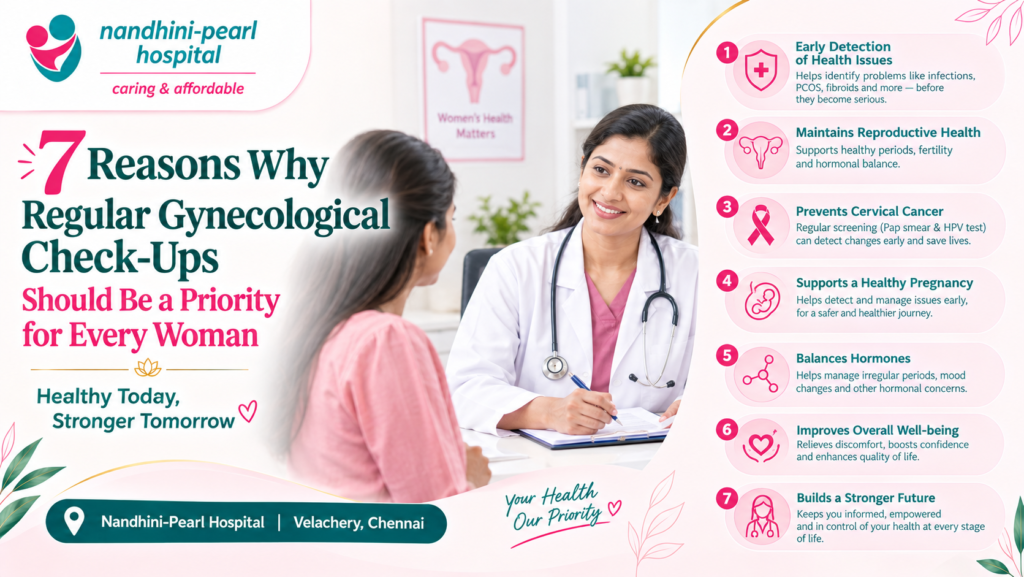
If you’re searching for the best gynecologist in Velachery or wondering how often women should have a gynecological check-up, you’re not alone. Many women delay routine visits because they feel healthy or are too busy with work and family. However, regular gynecological examinations help detect health problems early, prevent serious diseases, support reproductive health, and ensure overall wellness. At Nandhini Pearl Hospital, Velachery, our experienced gynecologists provide comprehensive women’s healthcare services including Pap smear screening, fertility consultation, pregnancy care, menopause management, PCOS treatment, and preventive health check-ups. This guide explains the seven most important reasons every woman should schedule regular gynecological check-ups. What is a gynecological check-up? A gynecological check-up is a routine health examination performed by a gynecologist to assess a woman’s reproductive and overall health. It may include a pelvic examination, breast examination, Pap smear, HPV screening, menstrual health evaluation, fertility assessment, and preventive health counselling. Why are regular gynecological check-ups important? Regular gynecological check-ups help: How often should women visit a gynecologist? Most women should visit a gynecologist once every year. However, women who are pregnant, planning pregnancy, experiencing menstrual irregularities, PCOS, infertility, menopause symptoms, or other gynecological concerns may need more frequent visits based on their doctor’s recommendation. Who should get a gynecological check-up? Women should schedule routine gynecological visits if they: Why Choose Nandhini Pearl Hospital for Women’s Health in Velachery? If you’re looking for a trusted gynecology hospital in Velachery, Nandhini Pearl Hospital offers comprehensive women’s healthcare under one roof. Our services include: With experienced specialists, advanced diagnostic facilities, and compassionate care, we help women stay healthy at every stage of life. People Also Ask Is a gynecological check-up necessary every year? Yes. Annual gynecological check-ups help detect diseases early and support preventive healthcare for women. At what age should a woman start visiting a gynecologist? Women should begin visiting a gynecologist between the ages of 13 and 15 for guidance and continue regular check-ups after becoming sexually active or by age 21 for cervical cancer screening. What tests are done during a gynecological check-up? Depending on your age and health condition, tests may include: Can gynecological check-ups detect fertility problems? Yes. Routine gynecological examinations can identify conditions such as PCOS, ovarian cysts, endometriosis, hormonal imbalance, and uterine fibroids that may affect fertility. Are gynecological check-ups painful? Most routine gynecological examinations are not painful. Some procedures, like a Pap smear, may cause mild discomfort but are generally quick and well tolerated.
When Should a Newborn Have Their First Bath? | Newborn Care in Velachery

For new parents, a baby’s first bath is one of those small moments that feels surprisingly big. After months of waiting, holding your newborn in your arms and preparing for that first bath can be exciting—but it can also bring plenty of questions. When should a newborn have their first bath? Is it safe to bathe a baby immediately after birth? Should you wait for the umbilical cord to fall off? What temperature should the water be? How often does a newborn actually need a bath? If you are a new parent looking for reliable newborn care in Velachery or Chennai, knowing the basics of newborn bathing can help you care for your little one with greater confidence. The good news is that newborn babies do not need frequent baths. In fact, delaying the first bath is recommended because newborns can lose body heat quickly after birth. According to the World Health Organization (WHO), the first bath of a healthy, term newborn should generally be delayed for at least 24 hours after birth. If a 24-hour delay is not possible for cultural reasons, WHO recommends delaying it for at least 6 hours. At Nandhini Pearl Hospital, Velachery, we understand that parents often need practical guidance during the first few days after delivery. This article explains when to give your baby’s first bath, why waiting matters, and how parents can make bathing safer and more comfortable. When Should a Newborn Have Their First Bath? A healthy, full-term newborn should generally have their first bath after 24 hours of birth. The reason is simple: newborn babies have difficulty regulating their body temperature, and bathing too early can increase heat loss. Delaying the bath allows the baby to stay warm while essential newborn care, skin-to-skin contact and feeding are established. However, the exact timing can depend on the baby’s condition, gestational age and the advice of the healthcare team. Premature babies, low-birth-weight babies or babies requiring medical care may need individualized newborn care rather than following a routine bathing schedule. Why Should a Newborn’s First Bath Be Delayed? Many parents assume that a newborn needs to be bathed immediately after delivery to remove blood or other fluids. Modern newborn-care guidance takes a different approach. The first hours after birth are important for helping the baby maintain body temperature, begin feeding and remain close to the mother. 1. It Helps Prevent Heat Loss Newborn babies are more vulnerable to changes in temperature than older children and adults. When a newborn is exposed to water, particularly if the surrounding environment is cool, body heat can be lost quickly. WHO recommends delaying the first bath of a healthy term newborn for at least 24 hours and taking measures to minimize heat loss when bathing does take place. This is one of the most important reasons healthcare professionals recommend delayed newborn bathing. 2. The First Hours Are Important for Skin-to-Skin Contact Immediately after birth, keeping the baby close to the mother supports essential newborn care. Skin-to-skin contact helps provide warmth and gives the mother and baby an opportunity to bond. WHO includes immediate skin-to-skin contact and thermal care among essential newborn-care practices. So instead of rushing to give the baby a bath, the early focus should be on keeping the baby warm, supporting feeding and allowing mother and baby to stay together when medically appropriate. 3. It Allows Early Feeding to Take Priority The first hours after birth are also important for initiating breastfeeding. WHO recommends supporting breastfeeding as soon as the mother and baby are clinically stable and ready. For this reason, bathing should not take priority over essential newborn care. A warm, calm baby who is close to the mother can have a more comfortable start to feeding and bonding. Does a Newborn Need a Bath Every Day? No. Newborn babies generally do not need a daily bath. A newborn’s skin is delicate, and frequent bathing can contribute to dryness or irritation. For everyday cleanliness, parents can gently clean areas such as: A full bath can be given according to the baby’s needs and the guidance provided by the pediatrician or newborn-care team. The goal is not to make the baby spotless after every feed or diaper change. The goal is to keep the baby clean, comfortable and warm. How Do You Give a Newborn Their First Bath Safely? Once your healthcare provider says your baby is ready for a bath, preparation makes a big difference. Before bringing your baby to the bathing area, keep everything you need within reach. You may need: Never leave a newborn unattended in or near water—even for a moment. A baby’s bath should be calm, quick and well supervised. What Temperature Should a Newborn’s Bath Water Be? The bath water should be comfortably warm, not hot. Newborn skin is sensitive, so parents should be especially careful about water temperature. A practical safety habit is to check the water before placing the baby in it and ensure that the bathing environment itself is warm enough to prevent the baby from becoming cold. Avoid relying only on your hand to judge whether water is safe. A bath thermometer can provide an additional check if you have one. Most importantly, never place a baby into water that feels hot. Should You Wait Until the Umbilical Cord Falls Off? Parents often hear that they must wait until the umbilical cord stump falls off before bathing their baby. The more important point is to keep the cord area clean and dry and follow the newborn-care instructions provided by your healthcare team. WHO advises hygienic umbilical cord care and recommends not applying substances such as ointments to the cord unless specifically advised. If your baby has a cord-related concern, such as redness spreading around the area, swelling, discharge or an unusual smell, speak to your pediatrician. Sponge Bath vs Tub Bath for a Newborn Parents may wonder which type of bath is best. Sponge Bath A sponge bath allows you to clean your baby